

Summary: Can exposure to cold weather contribute to illness, or are viruses the only factor? This article explores the relationship between germ theory, the body's internal environment and traditional approaches to seasonal wellness. Learn how diaphoretic herbs, which promote perspiration, have historically been used to support the body's response to fever and illness. Through a closer look at elderflower, yarrow, linden and chamomile, discover how traditional herbal practices compare with modern research on antiviral properties and immune support.
It was once universally believed that one could quite literally catch a chill. Exposure to the elements, in particular cold and damp weather, was earnestly feared and warm clothing would be worn not for comfort but as a precaution similar to taking extra vitamin C before airplane travel. What changed here? It was the discovery of viruses, a still poorly understood phenomenon that biologists fail to classify as being truly alive or dead. Yet each winter, we declare war on them as if they are a predator evolved to destroy us, rather than a mystery that cannot survive without us if it can be truly said to survive at all. The role of viruses versus exposure to cold in the common seasonal illnesses is of great importance to herbal medicine, where traditional treatments used for hundreds of years are under selective pressure to be rationalized by modern evidence-based medicine. One class of herbs once prized for seasonal immune support, the diaphoretics, risks being minimized or forgotten entirely beneath a tide of plants with newly discovered antiviral properties, some of which were never used to treat colds and flus in the past.
Catching a Chill? One Person’s Story
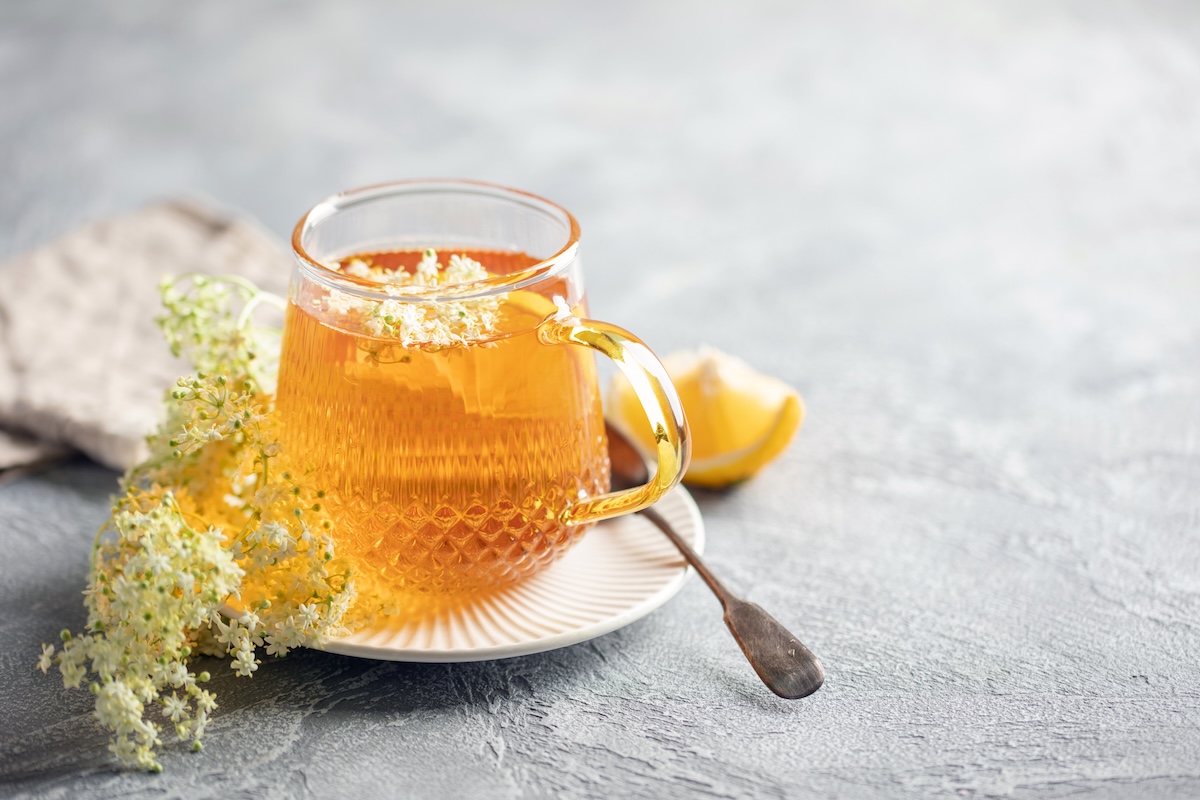
This is my own personal story, and while obviously an anecdotal case is nonetheless true, it persuaded me to reconsider whether catching a cold, as opposed to contracting a viral infection, is a legitimate phenomenon as was once universally believed. Like many people, once I learned about viruses, I considered this to be nothing more than an old superstition from a less-enlightened time. I used to develop bronchitis in the winter somewhat frequently, perhaps every other year, but never became seriously ill until I was twenty. I was sitting in a hot tub with my family over the holidays in Colorado, enjoying the steaming warmth while snow glittered across the freezing backyard beyond. I was ironically boasting about my robust health, high metabolism and phenomenal cold tolerance, when my brothers dared me to leave the hot tub and lie shirtless on the snow for a whole minute, in below-freezing temperatures. I was pouring sweat from the heat, and accomplished this easily without knowing that being chilled while perspiring was once feared as a cause of fever, rheumatism, and possibly death. I felt fine until around 9 PM, when after leaving the hot tub to go inside, I was suddenly wracked with bone-shaking chills starting in my lower back. Did I breathe in a virus out there in the freezing snow? No one else in my family got sick, but the next morning I had a bad cold that continued to worsen over the next several days, with a painful cough and vertigo so severe that I collapsed one morning unable to stand. I went to a doctor and was prescribed basic antibiotics (in this case azithromycin), which worked like magic to relieve my symptoms within a day or so, except for a slight fatigue and lingering cough which took six weeks to resolve. What truly made me question a viral cause is this exact illness came back, five years later. This time was after a particularly stressful term in the spring, when the same symptoms came back out of nowhere except I was also now coughing up thick, brown mucus. It felt like something that had been dormant for years had finally resurfaced, as if the antibiotics which left me with that lingering cough were too good to be true and had not cured the disease, but suppressed it. As I was studying naturopathic medicine this time, I tried elderflower tea before resorting to antibiotics and the effect was astounding. After several hours of profuse night sweats, I passed several liters of dark colored urine and awoke not only cured, but feeling more energetic than I had in years. Was this effect simply the result of a botanical inhibiting viral replication, or were my symptoms signs of repeated, unsuccessful attempts by my body to eliminate toxins, with elderflower finally helping that process succeed at a deeper level?
Koch’s Postulates
When germs were first discovered, even when they were noticed to frequently inhabit the secretions of sick people, it was not taken for granted that they were the causes of disease. In fact, that notion met with much early skepticism. To prove that a certain microorganism was causative of a certain disease, a set of four scientific criteria were developed called Koch’s Postulates. These were: 1) the organism must be present in every case of the disease, 2) it must be possible to isolate it outside of a host, 3) it must cause the same disease when introduced to a healthy host, and 4) again be possible to isolate from that new host. This procedure was used to scientifically prove that many diseases had an infectious cause, for instance tuberculosis, but many other diseases blamed on germs fail to satisfy Koch’s postulates, like strep throat. The organism presumed responsible, Group A beta-hemolytic Streptococcus pyogenes, can be found on the tonsils of 2% of the healthy population at any given time, proof that contact with the germ alone is not the cause of strep throat. When it comes to influenza and the many rhinoviruses and coronaviruses associated with the common cold, none have ever been shown to satisfy Koch’s postulates, leaving it an open question whether viruses or something else are the true cause of these diseases.
Germ Versus Terrain
The phenomenon of contagious illness in winter time is real, as are viruses which can be cultured, mutated, and attenuated into vaccines. But even if a virus can trigger the flu, it may not be the underlying cause, in the same way flies do not cause the smell of moldering garbage, but merely accompany it. If one wishes to rid one’s home of flies, a better solution than trying to kill them is simply to take out the trash which attracts them. This analogy serves to explain the terrain theory of infection: it is not contact with germs that causes disease, for we all contact germs every day and often harbor pathogens in our bodies while asymptomatic; it is an accumulation of toxins in the body that renders it susceptible to infection in the first place. This makes it plausible that suddenly suppressing a detoxifying process, like perspiration for instance, could result in an infection that would otherwise not have occurred. This also makes it plausible that a traditional diuretic and diaphoretic herb like elderflower could aid immunity by eliminating stored toxins, rather than killing a virus.
Enter Diaphoretics
A diaphoretic herb is quite simply one that promotes perspiration. This quality was prized before germ theory took hold, as it was once believed that breaking out in a sweat was necessary to relieve fever. Prior to the conception of immune support, most infectious illnesses were regarded as fever and treated as such, and so diaphoretics would be widely employed against fevers accompanying cold and flu. We now understand that fever is a positive response from the body that should not be suppressed and actually helps to promote recovery, and while some physicians of the day sought to battle the fever as the disease in itself, others would doctor the patient simply by monitoring them throughout the process, only seeking to bring down a fever if it escalated to dangerous levels. Many people are alarmed by a body temperature entering triple digits, even though high fevers up to 104 F can be perfectly safe to maintain as long as the patient is under supervised medical care and stays hydrated. The temptation is usually to treat fever as the disease rather than as a response to the disease, and interpret a rising temperature as a fearful sign that the disease is winning, as opposed to an encouraging sign of a strong constitution. The wonderful thing about diaphoretics is they do not actually break the fever as might have been supposed, but encourage what may be one of fever’s beneficial effects. If susceptibility to a viral illness depends on accumulated toxins, then sweating can be a great way to release these toxins and may be part of the reason for fever in the first place.
Diaphoretic and Febrifuge Vs. Antiviral Immune Support
While herbal medicine is still considered a traditional therapy today, there remains a sharp dividing line in the way it was practiced prior to and after the acceptance of germ theory. Although even Louis Pasteur rejected germ theory as the cause of disease, famously quoting on his deathbed that the germ is nothing and the terrain is everything, it has nonetheless been adopted as the dominant paradigm by both conventional and holistic practitioners. The notion of supporting a fever with diaphoretics has been entirely replaced by the notion of bombarding the body with the most concentrated extracts of herbs that have demonstrated in vitro antiviral activity. There are some remarkable coincidences here, for instance elder (Sambucus nigra) is both among the most potent antivirals according to research and among the strongest and most dependable of the traditional diaphoretics, praised as a treatment for sniffles for hundreds of years. But does it work by killing flu viruses or promoting the release of toxins through perspiration? It is tempting to think that any herb with antiviral activity can support the immune system, but in truth it is more difficult to find a herb that lacks antiviral activity than to find one that does. Even herbs that were never traditionally used for what we now class as viral illnesses seem to slow viral replication, at least when viral cultures are bathed in their extracts. But if the ability to kill viruses makes something curative, it should be just as effective to treat the flu with whiskey, which is still sworn to be effective by some people. Even if there is some truth to this, it is unlikely that cells in the mucous membranes are being saturated with ethanol in sufficient concentration to kill viruses, just as it is unlikely that a few droppers of elderberry tincture is depositing meaningful quantities of antivirals upon passing through digestion and entering circulation. Alcohol promotes vasodilation which can relieve some forms of congestion, and of course stimulates detoxification pathways in the liver as well. If there is any truth to a hot toddy treating a cold, it likely involves its effect on the body itself, not on a virus.
Before the discovery of germs and the microscopic immune cells styled as our soldiers in a battle against them, traditional herbalists chose medicine for their subtle effects on the sick person’s body, not their effects on an isolated germ in a petri dish. This helps to explain why even something like four ounces of a weak infusion – a single cup of tea – can sometimes have remarkable effects, even without fully extracting an herb’s presumed active constituents. What is remarkable about the advances in herbal medicine over the last few decades is not how much more effective our treatments have become, but how much overlap has emerged between the modern antiviral and traditional energetic explanations of how these herbs work. While elderflower and berry remain popular choices for immune support, given their demonstrated antiviral properties, other traditional diaphoretics like yarrow, linden, and chamomile, which can be just as effective, risk being forgotten when herbs are treated like “natural” antibiotics.
 A Better Understanding of Sepia for Treating Fatigue