
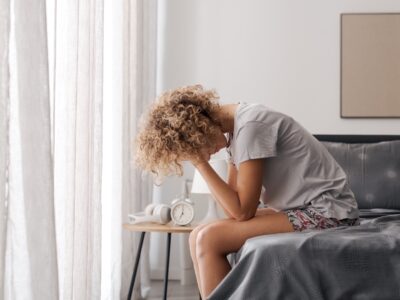
Summary: While Sepia is often associated with women’s health, its traditional homeopathic uses are not limited to women. Sepia may also be considered for men, particularly when fatigue is accompanied by a broader pattern of symptoms associated with nervous system exhaustion and sluggish circulation. In this article, Ian Spohn, one of our staff NDs, explores Sepia as a homeopathic remedy for fatigue in both men and women, highlighting characteristics such as feeling better with movement or exercise, increased energy in warm weather and sunshine, changes in energy throughout the day, and emotional flatness. The article reinforces the individualized nature of homeopathy, where the complete pattern of symptoms, not gender or a single complaint, helps guide remedy selection.
Probably no homeopathic remedy has a greater reputation for addressing “female complaints” than Sepia. Not only is this remedy widely considered among the top ten constitutional polychrests, Sepia ranks easily within the top three (with Pulsatilla and Lachesis) remedies for menopausal complaints. For women’s health in general, Sepia’s reputation in issues relating to fertility, pregnancy, menstruation, and menopause is so famous that many practitioners have no notion of even considering it for a male patient, even though it can be effective for fatigue and sadness, not to mention a variety of digestive and circulatory concerns in men and women both. Sepia is quite near the most valuable and commonly indicated remedy for fatigue, a symptom of growing concern among many people today, and yet is often ignored or forgotten when patients fail to conform to its archetypal profile, a tired and overworked mother with hormonal concerns. It is probably just as often prescribed to no effect when a different remedy would be better indicated, simply because the patient happens to fit this profile. A better understanding of this remedy and its true sphere of action is needed to get the best results when treating fatigue, a complex phenomenon with many root causes.
Although no discussion of Sepia would be complete without highlighting its unique relation to the female endocrine system, and even to the archetypal feminine experience in general, its primary action on the human body is not exerted on the hormones of either sex. Rather, Sepia acts primarily on the nerves and circulatory system, and its use in homeopathy can never be fully understood without regarding it through this lens. To truly appreciate and utilize Sepia as a remedy for fatigue, it is important to understand it not primarily as a hormonal remedy, but as a tonic for the nervous system when a patient’s fatigue and allied symptoms indicate sluggish circulation, especially in the abdomen and pelvis, where of course much of the female endocrine system is located. It is the location of so many female organs in the pelvis that likely explains its special relation to female hormonal concerns, but its action on the nerves and circulatory system is more valuable to understanding the remedy’s effects in either gender.
The sluggish circulation of Sepia, especially in the veins, can be readily appreciated in several of its keynotes: faintness while kneeling, a fullness or “ball” sensation felt in the lower abdomen or pelvis (due to venous congestion), a tendency to experience Raynaud’s phenomenon, as well as hemorrhoids and varicosities. Sepia is also a useful and underrated remedy for the liver, and its suitability to the complaints of men with a long history of alcohol use, a lesser-known point that is repeatedly emphasized in older materia medica, suggests an action of the veins of the hepatic portal system. This may play a role in the abdominal bloating and numerous digestive complaints for which Sepia is more famous for treating, but even the circulatory system as a whole cannot fully account for the breadth of Sepia’s symptom picture, with the attendant exhaustion, sinking, and dragging that seems to afflict the entire patient. A complete study of the remedy reveals its profoundly depressing effect on the entire nervous system, which explains why some element of fatigue is almost invariably present when someone needs this remedy.
Sepia should indeed be among the first remedies considered for anyone presenting with fatigue as a primary complaint. The type of fatigue which calls for it is a generalized state of relaxation, sometimes to the extent of sagging, prolapse, and absence of smooth muscle tone. Since the blood vessels also rely on smooth muscle to retain their tone, this explains why Sepia so often experiences faintness and has so many venous and menstrual symptoms. Even the eyelids tend to droop, suggesting a lack of sympathetic nervous system tone. It is likely that the dragging sensation often complained of in the stomach, abdomen or uterus is literal, and that the physical displacement of these sagging organs accounts for many of their functional symptoms. Even Sepia symptoms that are distinctly hormonal, like aversion to sex, nausea from the smell of food, and chloasma (brownish discoloration of the face caused by fluctuating hormones) may originate at least partially from a loss of nervous tone or circulatory stagnation in the ovaries, the organs responsible for synthesizing these hormones.
Though Sepia should always be considered for fatigue, like all homeopathic singles it only works well in specific cases when the entirety of symptoms agree. Because its action on the nerves and circulation gives such a vast field of localized symptoms, the remedy’s generalities are the most useful for determining a successful prescription. This is especially true for male patients, where pelvic congestion does not affect the hormonal system in the same way or produce any symptoms relating to menstruation, infertility, pregnancy, or menopause. For Sepia to help with fatigue, the following characteristics should almost always be present, in which case it tends to work phenomenally:

- General improvement from exercising: this is probably the most striking and important feature for deciding upon a Sepia prescription. It should make sense that any form of excitement that gets the blood pumping would benefit the congested Sepia state. The striking aspect is that even while suffering from severe fatigue, the patient will want to exercise and feel better afterwards. Even painful conditions like headache and gastrointestinal distress will be relieved by exercise or some form of vigorous movement. Although the fatigue can occasionally be severe enough that the patient no longer wishes to exercise, even then there may still be noticeable improvement from something like taking a gentle walk, which distinguishesSepia from other fatigue remedies where attempts at exertion tend to aggravate. Any excitement that stimulates the relaxed sympathetic nervous system will improve the fatigue of Sepia, at least temporarily. The materia medica lists amelioration during thunderstorms and a desire for dancing as classic keynote symptoms of the remedy. A note on the desire for dancing: Sepia is famous for this, and while it may be noted in a modern patient, it is far more common today to encounter the Sepia constitution in women who desire to play sports, and often excel at them. It must be remembered that in the 19th century, when most of the classical materia medica was compiled, women’s sports would have been considered controversial if they existed at all, and so dancing may have been the best way for an athletically inclined woman to become physically active without being considered socially transgressive. Today, it is far more common to see the desire for excitement and motion manifest as a love of sports. People who benefit from Sepia often have an athletic background, sometimes indeed tracing their fatigue or other problems to a period of intense athletic training.
- Better in sunshine, worse from cold: temperature and seasonality are always important in homeopathy, and someone who will benefit from Sepia will almost always be chilly and feel significantly worse in the winter, reporting some increase of energy during the summer and especially in warm, sunny weather. This helps distinguish Sepia from another, otherwise quite similar remedy for sadness and fatigue, Natrum Muriaticum. Someone needing Natrum Muriaticum may be chilly, but will almost invariably feel more tired and worse generally in direct sunlight, whereas the sun can act as a rare tonic to Sepia. This again goes back to exhaustion of the sympathetic nervous system and consequent bad circulation: heat stress activates the sympathetic nervous system, stimulating blood vessel dilation to help bring more blood to the skin and thus dissipate heat. This tends to paradoxically relieve the overall Sepia state. It is important to note that while many people prefer the warmth and complain of being cold, Sepia is actually relieved and gains more energy in the heat of the sun, both physically and emotionally.
- Better in the afternoon, worse in the forenoon and evening: their energy is bad all of the time except for a slight window between the hours of 1-5 PM. This is often ascribed to the inscrutable nature of homeopathy, but there is in fact a physiological reason why this symptom gives a clue to the Sepia state’s circulatory imbalance. Many aspects of the body follow a circadian rhythm, and the circulation is no exception: endothelial function, referring to the ability of blood vessels to dilate in response to activity, rises in the afternoon until about evening, peaking around 3 PM. This period of highest endothelial function, between 1-5 PM, corresponds exactly to the time when Sepia symptoms tend to improve or patients report feeling the best. Incidentally, this also explains why heart attacks and strokes seem to peak in the morning between 6 AM and noon, and are least likely to occur in the afternoon.
- Emotional flatness: this is a characteristic more difficult to describe, and one which must be observed as opposed to elicited through questioning. Patients presenting with fatigue can nevertheless sometimes relate their symptoms with intense emotion, including such as may seem to conflict with the energy levels being described. Such presentations can range from tearful despair, frustration, ceaseless worry, or a meticulously demanding bearing that suggests much effort has been put into preparing for the consultation. With Sepia however, the fatigue is palpable even when patients don’t complain of it. One of the clearest indicators is in the voice, often a weak, distinctly bored-sounding monotone. It’s sometimes possible to correctly guess someone needs Sepia just by hearing them over the phone when they call in to schedule. Unlike some patients who complain of their overwhelming fatigue with intense passion, even anger and hopelessness, in someone needing Sepia the overall bearing betrays the emotional flatness that lies behind keynote symptoms such as total loss of libido, aversion to loved ones, and indifference to everything. They can seem indifferent even to their own symptoms, appearing gentle and resigned with only a flicker of the bored sarcasm for which they’re also famous.
Fatigue is a complex symptom that can result from an almost unlimited number of complex root causes, hence it is notoriously difficult to treat. Homeopathy is one of the most effective modalities, but only when the correct remedy is chosen to match the totality of symptoms. Of the remedies with a reputation for relieving fatigue – Phosphoricum Acidum, Muriaticum Acidum, Gelsemium, Silicea, China, Arsenicum Album – probably none are indicated more frequently than Sepia, although it is often ignored when gynecological symptoms are not prominent, or the patient is male. Studying Sepia as a remedy for nervous exhaustion and circulatory stagnation, not as a “female” remedy as it is so often taught, will enable one to grasp and utilize the full range of this important polychrest, as one of the best remedies in the entire materia medica.
 Cat’s Claw and Ginkgo Support Detoxification from Glyphosate