
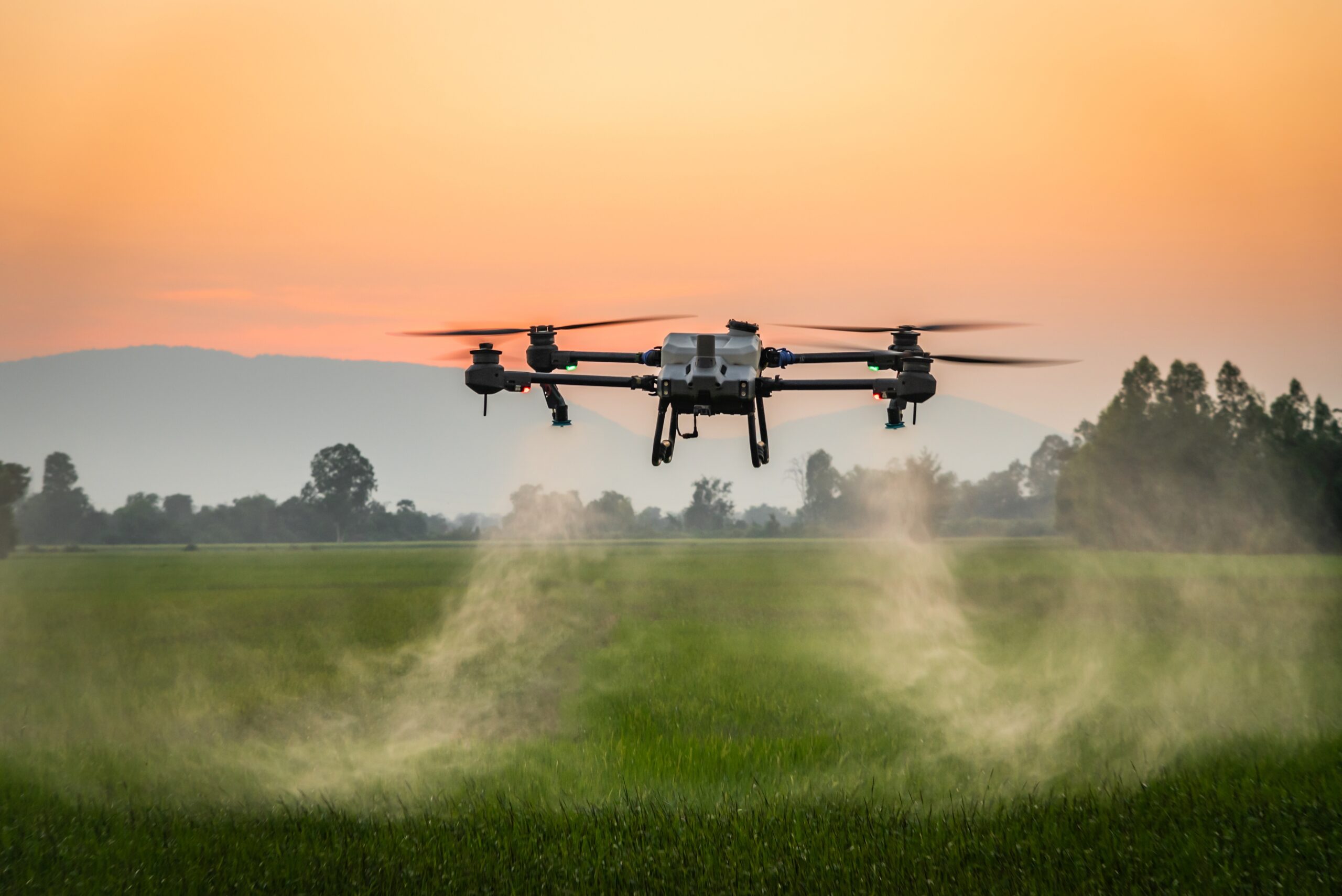
When are allergies not really allergies? When they’re actually a reaction to airborne glyphosate. The symptoms of glyphosate inhalation can be life-threatening in large doses, say through accidental occupational exposure, but in small doses obtained through contact with polluted air, it can cause mild upper respiratory irritation that closely mimics a seasonal allergy attack. These include all the usual symptoms such as sneezing, coryza, nasal congestion, burning or tingling in the mucous membranes, itching and irritation of the throat and eyes, increased salivation, unpleasant taste in the mouth, coughing, wheezing, and shortness of breath due to mild pulmonary edema. The overlap between glyphosate and seasonal allergens is sufficient enough that many people are inclined to blame mother nature when in fact, man is to blame. The fact that airborne glyphosate exposure follows a seasonal pattern only increases the potential for error, since it is often sprayed in springtime before planting and shortly before harvest as a crop desiccant, closely coinciding with peaks in naturally occurring pollen counts.
Glyphosate may be applied as a weed killer to crops genetically modified to resist it throughout the growth season, but its use is even more widespread as a desiccant applied before harvest, as it may be sprayed on both GMO and non-GMO crops, like wheat and oats. This makes it especially likely to be in the air around harvest seasons, generally somewhere between late August and October depending on the crop and location. The purpose of spraying glyphosate on non-GMO crops is indeed to kill the plants intentionally, which makes them dry faster after the crop has matured, to speed up harvesting. This practice explains why glyphosate exposure has become such a concern through non-GMO foods like bread, oatmeal, and granola bars, and as proof that this practice is harmful to humans, it has been banned by the European Union, though it remains legal in America. But even if one is largely able to avoid glyphosate in food, it may be impossible to avoid inhaling it through the air if one lives anywhere near a field it is being sprayed upon. Upper respiratory irritation from airborne herbicide and fungicide exposures is likely a much bigger problem than generally supposed, since the symptoms so closely mimic and are therefore likely to be blamed on seasonal allergies.
The fact that seasonal allergies are quite real can make it difficult to pin down the true cause of someone’s symptoms. Certain airborne herbicides like paraquat are famous for causing nosebleeds, pointing more clearly to a toxic exposure than an allergy; these can be triggered from simply spending time outdoors nearby where it is being sprayed. However, the majority of these chemicals cause non-specific allergic-type symptoms in the doses one is likely to encounter in contaminated air. The number of possible chemicals extends beyond glyphosate to various fungicides and herbicides, and many of these are combined with chemical surfactants to make them stick to plants, which themselves can trigger symptoms. Glyphosate, for instance, is often combined with polyoxyethyleneamine (POEA), which is in fact responsible for most of the irritation to the airway and mucous membranes upon inhaling it.
It can require a high degree of suspicion to identify herbicides as the cause of seasonal airway symptoms, as well as a knowledge of local agricultural practices. Here at Energique, where we manufacture our natural medicines in the agricultural heartland of the USA, we are no strangers to the realities of glyphosate use. It is difficult to venture far without encountering fields of genetically modified corn and soybeans, and my personal experience with allergies allowed me to correctly identify airborne toxins as the cause of my own symptoms. I struggled with seasonal allergies for years, beginning in my teens, every spring around March and any time I visited a new area with new plant life. These symptoms followed me across three states before being radically and permanently treated by constitutional homeopathy. A single remedy I had been taking daily for about a month threw me into a healing crisis, and it was not until the following spring that I realized to my shock that I wasn’t experiencing allergies. This remarkable experience is indeed much of what led me to study homeopathy, and I have not experienced seasonal allergies since, for more than a decade. So it struck me that a few years after moving to Iowa to work at Energique, I began to develop what I thought were allergic symptoms.
At first, this was a blow to my confidence in homeopathy, but there were differences that I could not ignore. None of my other constitutional symptoms had returned, and I was only having symptoms in late August and early September, whereas my old seasonal allergies were always in springtime. It was when I noticed a definite burning and tingling in my nostrils while out on a walk one day, and then saw a crop plane flying overhead, that I began to suspect airborne herbicide exposure was in fact triggering my mysterious allergy symptoms. I must admit, as a naturopathic doctor, even I tended to downplay the significance of pesticide exposure until I became a personal victim of it, but the truth was inflaming my nose and staring me in the face.
In the naturopathic therapeutic order, seasonal allergies are best treated at level 2. This means that the basic determinants of health are intact and there are no environmental factors causing the disease (level 1), because let’s be real, pollen is a naturally occurring inevitability that all animals have coevolved to live disease-free amongst. At the same time, the immune system itself is strong and working just fine, almost too well, so there are no organs or functions that need to be strengthened (level 3). Level 2 interventions are referred to as balancing the vital force, which in the case of allergies is causing the body to defend itself against something harmless. Factors that tend to derange the vital force including trauma or chronic stress, suppressive medical interventions, and sometimes epigenetics, and when this happens homeopathy is the natural treatment par excellence, acting directly upon the vital force to rebalance it. But toxic exposures are different, and require primary prevention by minimizing exposure to the toxin (level 1), and if necessary strengthening the body’s detoxification systems to help eliminate it (level 3). It is useful to think in terms of minimizing exposure as opposed to avoiding entirely, because everything can be toxic in sufficient amounts and it is impossible to completely avoid every potential toxin, especially living in the modern world. The body is also well-equipped to resist and eliminate most toxins, as long as exposures do not become excessive.
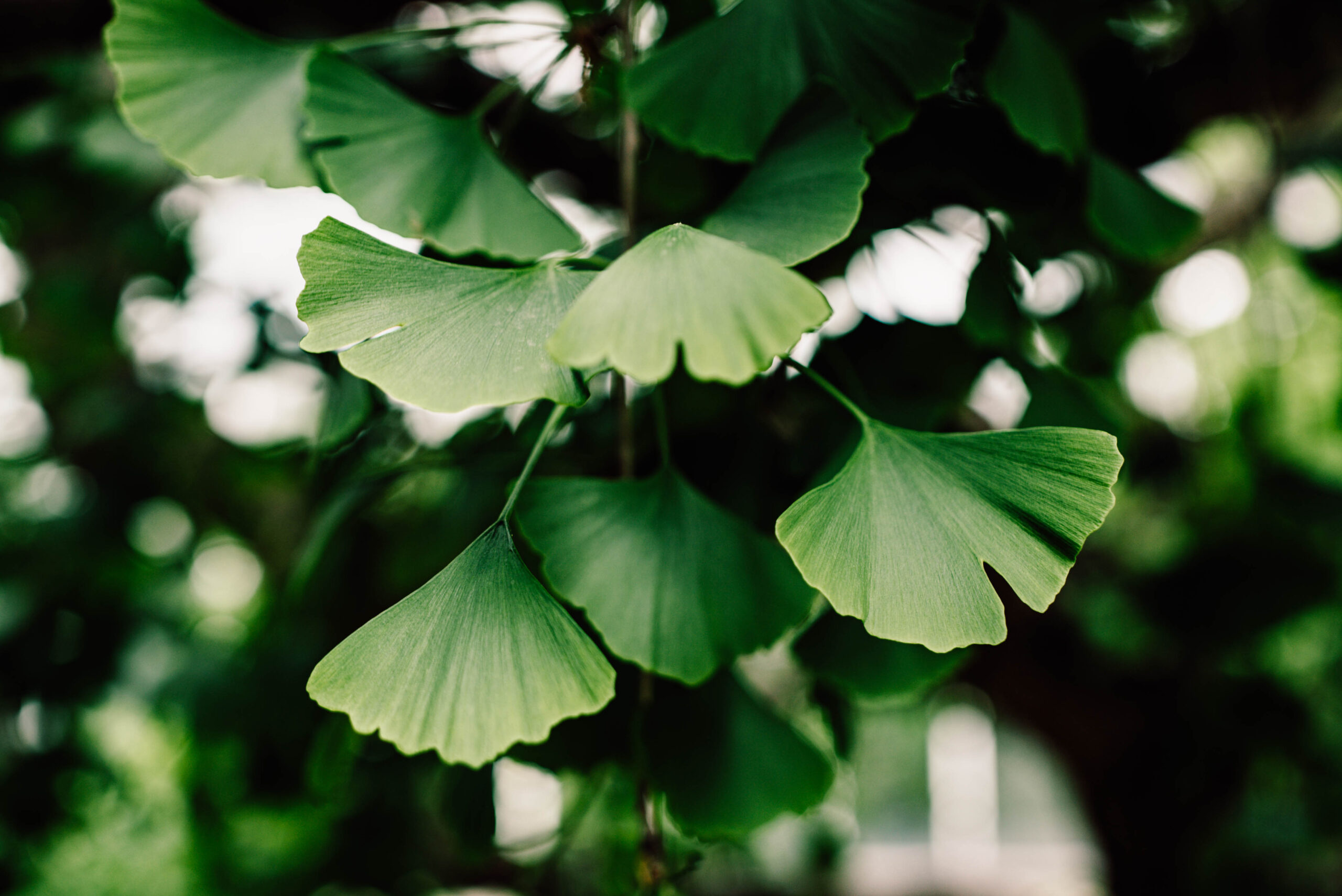
Perhaps because glyphosate’s danger is not widely admitted, there has been little research on ways to support its detoxification, though two herbs have stood out. Both are known for their antioxidant and cellular protective properties, so while few herbs have researched specifically against glyphosate, it is reasonable to suppose any similar herbs possessing these qualities might be beneficial. The first is Ginkgo biloba, well known for supporting brain and circulatory function as well as promoting longevity through mechanisms that remain but are, partially understood. Ginkgo stands out within the doctrine of signatures for lacking several genes related to aging and being able to live for thousands of years, though its effects on human longevity are believed to involve lipid peroxidation. This is a process through which naturally occurring oxygen radicals, and some toxins, destroy cell membranes, leading to cellular death and aging. Gingko has been repeatedly shown to protect cells against oxidation and lipid peroxidation in particular, which has been identified as one of the primary mechanisms of glyphosate toxicity. This may have been what prompted researchers to test its protective effects, and indeed it has been shown to mitigate the harms of glyphosate exposure by reducing lipid peroxidation and genotoxicity.1
The other herb that has stood out in research is Uncaria tomentosa, an Amazonian vine known as uña de gato or cat’s claw. Its traditional uses are extensive and suggest remarkable cellular and antimutagenic properties. Cat’s claw’s antioxidant effect has been explored against a number of environmental toxins including glyphosate, in which case it has been shown to again reduce lipid peroxidation, reducing glyphosate-induced damage in the brain and liver.2 Ginkgo and cat’s claw are both excellent antioxidant sources that can be taken daily to support normal detoxification, and both backed by research for those wishing to stay healthy in an environment where permissible levels of glyphosate exposure are virtually unavoidable, though anything rich in flavonoids, terpenoids, or antioxidant phenolic compounds is likely to offer protection. This includes all of the usual health and longevity aids like dark berries, tea and coffee, citrus fruits, and aromatic herbs like mint and rosemary. There are few reliable ways to remove glyphosate from the body, apart from taking large doses of glycine in an effort to flush it out, and it is easy to become depressed over its ubiquitous presence in our food supply, and even our water and air, as it becomes increasingly contaminated through its use. But the good news is that the best way to minimize glyphosate’s long-term effects in most cases is simply to strive towards general wellness and longevity.
1. Cavuşoğlu K, Yapar K, Oruç E, Yalçın E. Protective effect of Ginkgo biloba L. leaf extract against glyphosate toxicity in Swiss albino mice. J Med Food. 2011 Oct;14(10):1263-72. doi: 10.1089/jmf.2010.0202. Epub 2011 Aug 22. PMID: 21859351.
2. Santo GD, Grotto A, Boligon AA, Da Costa B, Rambo CL, Fantini EA, Sauer E, Lazzarotto LMV, Bertoncello KT, Júnior OT, Garcia SC, Siebel AM, Rosemberg DB, Magro JD, Conterato GMM, Zanatta L. Protective effect of Uncaria tomentosa extract against oxidative stress and genotoxicity induced by glyphosate-Roundup® using zebrafish (Danio rerio) as a model. Environ Sci Pollut Res Int. 2018 Apr;25(12):11703-11715. doi: 10.1007/s11356-018-1350-6. Epub 2018 Feb 13. PMID: 29442306.
 Research Shows Weightlifting Preserves and Improves Cognitive Health