

There are some skeptics out there who are “debunking” the notion that treatments like massage therapy can promote detoxification. Some have even gone so far as to ridicule the common advice to drink extra water after receiving a massage, to help flush out the toxins that may be released through deep muscle stimulation. They scoff at the notion that massage can squeeze stored toxins out of cells, claim that lactic acid is beneficial to the body, and try to gaslight anyone who claims their malaise after receiving a massage is evidence of toxins being stirred from the tissues, pointing to poorly conducted research or echoing the claims of other skeptics. They attempt to wield the relatively modern notion of evidence-based medicine against thousands of years of accumulated wisdom from India, China, and ancient Greece extolling the benefits of massage therapy against a wide range of diseases. Let’s dive further into some of these claims and consider whether using a massage to detoxify the body truly is a myth.
CLAIM: MASSAGE THERAPY CAN’T RELEASE STORED TOXINS
The primary claim skeptics wish to debunk is that massage therapy can aid in detoxification, by promoting the release of toxins stored in tissues. Many critics ridicule the notion that a massage is literally squeezing stored toxins out of the muscle cells, while failing to understand what’s really going on through this gross oversimplification. Traffic through cell membranes is tightly regulated by electrical currents and protein channels, and it is true that manual pressure cannot generally push things out through a cell (though there are some ion channels that are pressure sensitive). But this doesn’t mean that massage isn’t helping to eliminate toxins from the body. Normally, toxins are released from cells into the extracellular space, a complex matrix of proteins wherein anything present can affect cell function through intracellular signaling. So whether they’re in the cells or accumulated in this space, toxins can disrupt the body.
There are only two ways these stored toxins can be removed: either they can enter the bloodstream and be sent to the liver and kidneys, or they can be phagocytized and destroyed by white blood cells. There is also a third route: they can enter the lymphatic system, but in this case they will still meet the same fate, either to be dumped into the bloodstream or sent to lymph nodes and destroyed by white blood cells. So the key to removing stored toxins from the body is really to promote circulation, especially to deep tissues. Blood is what carries toxins to the liver and kidneys away from other cells, blood is what allows white blood cells to enter and circulate through the area, and manual pressure can be an effective way to move lymphatic fluid as well as move blood through veins (where flow is often restricted by valves).
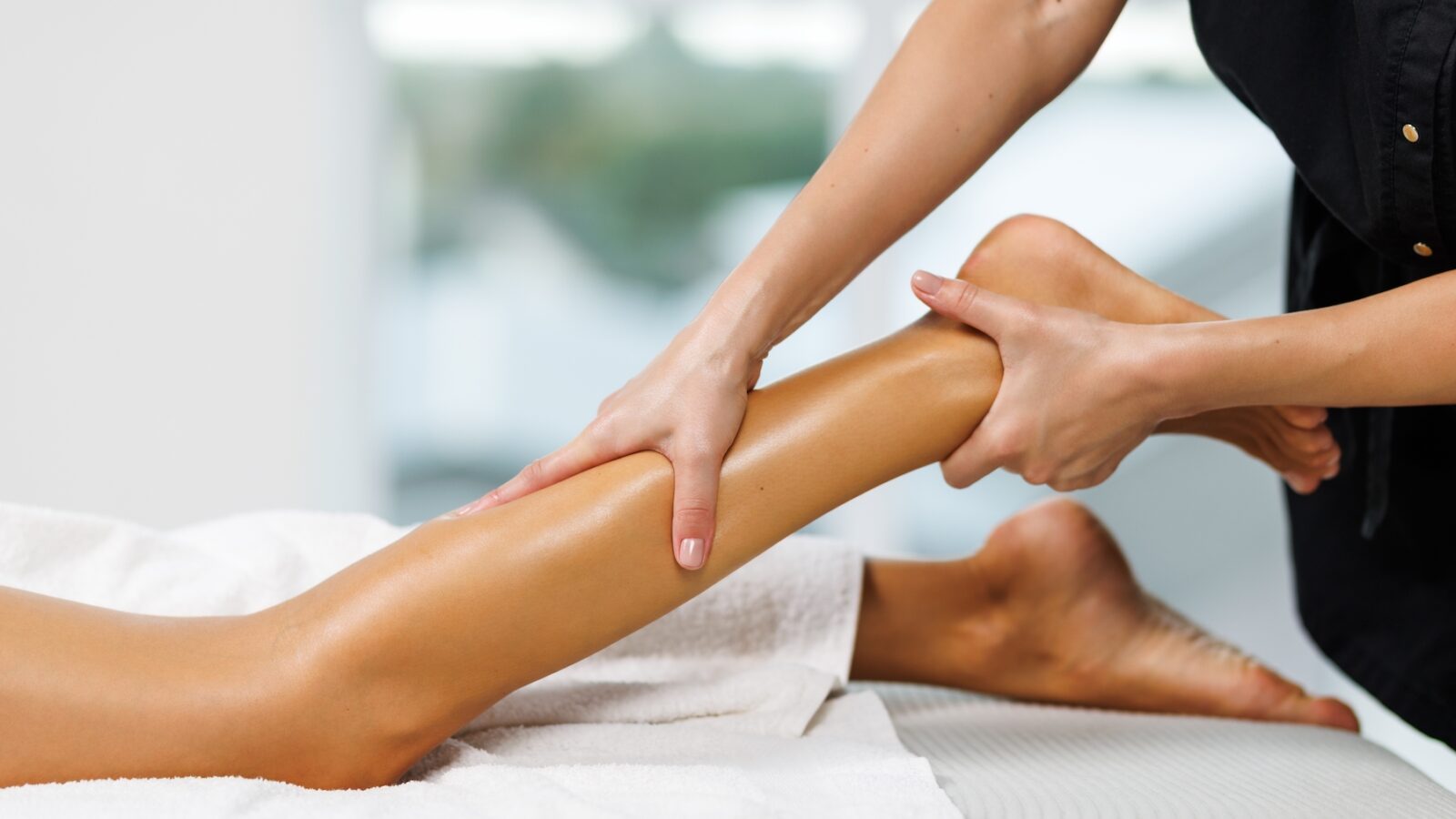
There are also several mechanisms through which a massage can deliver more arterial blood to stagnant areas and improve circulation in general. First, simply rubbing an area will increase the local circulation, causing it to redden. But more importantly, the therapeutic benefits of massage for relaxing tight muscles can itself deliver much-needed arterial blood to stagnant areas. Toxins, whether exogenous or endogenous, are especially problematic to areas not adequately perfused, as this limits the rate at which toxins can be removed through the circulatory system. Tight muscles create these areas, because muscle contraction restricts blood flow. This is one of the reasons why working muscles fatigue so quickly and generate lactic acid: the act of contraction increases energy demand while simultaneously restricting blood flow to muscle cells. When a muscle is chronically stiff, tight, or shortened, this can also restrict blood flow to and from the area, creating stagnant pools where toxins can accumulate. So when toxins are released after a good massage, it is likely because these areas have been relaxed enough to allow normal perfusion. The movement of venous blood and lymph through the manual pressure only further assists in clearing toxins from the area.
Many who are bent on evidence-based medicine will still try to minimize the benefits of such treatment, claiming massage is only good for managing stress and promoting relaxation, with maybe some therapeutic benefit to overworked muscles. However, the true benefits of restoring circulation and moving fluids through stagnant areas are far-reaching and form the basis of many time-tested holistic therapies. Constitutional hydrotherapy is one of the original cornerstones of naturopathic medicine and has been used to treat everything from viral infections to cancer, though not in randomized controlled trials as it is generally employed in holistic protocols tailored to individual patients. This technique uses the contrast of hot and cold water applications in addition to sine waves – harmless electrical currents that stimulate rhythmic muscle contraction – to pump blood and lymphatic fluid through tissues, especially tissues which cannot be manipulated directly through massage therapy, like the lungs and digestive organs. The expansion and contraction of blood vessels in response to hot and cold, and the stimulation of venous and lymphatic flow through smooth muscle contraction, essentially serves as a pump to move fluid through congested or stagnant areas, aiding detoxification. Regular massage can provide many of these same benefits, and should be considered as a legitimate medical therapy.
CLAIM: LACTIC ACID IS NON-TOXIC, DOESN’T ACCUMULATE, AND IS ACTUALLY A BENEFICIAL FUEL SOURCE
Other claims leveraged by skeptics of massage therapy involve lactic acid, that notorious substance often implicated in muscle fatigue. There’s quite a lot of scientific controversy around lactic acid as its complete role in the body is not properly understood, which makes claims involving it a poor choice for discrediting anyone. Nevertheless, skeptics love to downgrade the benefits of massage by arguing that lactic acid is harmless and possibly even beneficial, serving as a cellular fuel source. To begin with, lactic acid is not harmless and is in fact so toxic as to be deadly in sufficient doses, if the body is unable to clear it fast enough. There are case reports of death following the accidental administration of lactic acid intravenously1, and while the dose does make the poison and fatal levels are unlikely to result from exercise, this should underscore to anyone that it is not a wholly benign substance. That lactic acid can be used as a fuel source for cells is also no argument that it should be considered harmless. Glucose is a fuel source for cells, and the detrimental effects of chronically elevated glucose levels are well known. During anaerobic states, glucose can be converted to lactic acid as an inefficient fuel source, and re-converted back to glucose in the liver through a process called the Cori cycle. Some cells can even use lactic acid as a direct fuel source, such as cardiac muscle, but most lactate generated by the body is cleared by the liver, not the muscles themselves, meaning lactate produced in the muscles must be released into the bloodstream to be efficiently removed. This is where techniques like massage are useful, increasing circulation and moving the fluids which will bear accumulated lactate away.
Studies using healthy volunteers show that lactic acid produced during exercise is normally cleared from the muscles within an hour, and from this it has been argued that lactic acid doesn’t actually accumulate, as some massage therapists claim. But studies also show that under certain conditions, namely bad circulation and chronic inflammation, lactic acid does accumulate, and tight, overworked muscles can of course create areas of bad circulation. So again, the claims of skeptics rely on an absence of institutionalized research while ignoring basic physical truths about the body.
CLAIM: POST-MASSAGE MALAISE HAS NOTHING TO DO WITH RELEASING TOXINS
One of the most toxic arguments made is the notion that hydrating after a massage is useless, and any extraordinary malaise experienced does not involve the release of stored toxins, as this serves to gaslight anyone who holds this belief through their own experience. Skeptics love to claim that they know better than you, even when you have lived an experience and they have not, as if they are jealous that you got to experience some special phenomenon that has yet eluded them. The phenomenon referred to here is post-massage soreness and malaise (PMSM), a recognized syndrome that can involve more than just aches and pains after deep tissue manipulation. Headache, nausea, whole-body fatigue and even flu-like symptoms are known to occur in some people following a deep massage, but don’t worry, skeptics will assure you this has nothing to do with theoretical toxins being stirred up and released. These systemic symptoms have been likened to delayed-onset muscle soreness following a workout, or even attributed to rhabdomyolysis, a necrotic breakdown of muscle tissue. But does anyone report feeling this flu-like malaise after completing a hard workout, which can cause delayed-onset muscle soreness and even rhabdomyolysis?
The truth here is likely to be nuanced, because the benefits and harms of exercise probably overlap with those of massage, and vice-versa. I’ve lifted weights for more than twenty years, run several ultramarathons, and done more than my share of foam rolling, stretching, and therapeutic movement to address dysfunctional muscles. There is definitely a type of fatigue and soreness that can linger for days after a very hard workout, such as running a 50K or lifting a heavier weight for the first time, but there is also something very different that can trigger after a bout of foam rolling or sometimes even stretching and breathwork, which feels very much like a viral illness. I’ve developed sore throats after foam-rolling muscle knots, presumably indicating lymphatic involvement which would imply the release of toxins, yet I’ve never had this happen after a workout. So I choose to take seriously anyone who claims to feel toxic after receiving a massage.
CLAIM: SWEATING DOESN’T REMOVE TOXINS
This one bears mentioning, because it’s often referenced when dismissing the benefits of anything to do with detoxification. Skeptics claim that treatments like saunas, often used in conjunction with therapies like massage to assist detoxification, don’t work because sweating can’t actually eliminate toxins. It is argued that the cells which produce sweat are secretory, not excretory, meaning they are not used by the body for elimination, only temperature regulation. Of course it’s true that the primary purpose of sweat is not to remove toxins, but evidence-based skeptics have no excuse to deny that sweating can eliminate toxins when numerous published studies confirm exactly this23. So yes, toxic heavy metals like arsenic, cadmium and lead are excreted from the body through sweat glands.
Massage therapy is a great way to relieve sore muscles, support athletic goals, or even just relax and deal with stress. But it has been claimed to do much more: traditionally, historically, anecdotally, and in the literature of various healing disciplines forgotten or disdained by orthodox science. While we should all be interested in pursuing the truth, a curious and open-minded attitude is far more conducive to this end than close-minded skepticism.
- YOUNG EG, SMITH RP. LACTIC ACID: A CORROSIVE POISON: REPORT OF THREE FATAL CASES WITH EXPERIMENTAL CONFIRMATION. JAMA. 1944;125(17):1179–1181. doi:10.1001/jama.1944.02850350017005 ↩︎
- Shengxiang Tang, Xinzhe Yu, Cinan Wu. Comparison of the Levels of Five Heavy Metals in Human Urine and Sweat after Strenuous Exercise by ICP-MS. Journal of Applied Mathematics and Physics, Vol.4 No.2, 2016. ↩︎
- Kuan WH, Chen YL, Liu CL. Excretion of Ni, Pb, Cu, As, and Hg in Sweat under Two Sweating Conditions. Int J Environ Res Public Health. 2022 Apr 4;19(7):4323. doi: 10.3390/ijerph19074323. PMID: 35410004; PMCID: PMC8998800. ↩︎
 Are You Taking Too Much Plant Medicine?