
Do you take something for mood support? What about relaxation? Aches and pains? Digestion? Cognition? Immune Support? What do you take to help deal with stress? What about exercise recovery? Thinning hair? Trouble sleeping? What’s the best natural supplement for weight loss? How can I prevent aging? Botanical medicine offers solutions for all of these problems, however, many of these issues can also be addressed with diet and lifestyle changes. Herbal supplements can provide deep healing and improve vitality in a number of ways, but is it possible to be taking too much plant medicine?
We tend to view herbal supplements as improving some aspect of the body’s normal function, and as many of them have no real side effects, it becomes easy to justify taking something to help with everything. There are some cases where people truly need support in one area, and in those cases taking the right herb or formula can do wonders, but as healing plants have moved out of traditional medicine and into the dietary supplement space, there has been a tendency to view them less as healers and more as exactly that, supplements. But unlike many dietary supplements, which provide concentrated amounts of substances normally found in food, most herbs are entirely xenobiotic to the human body, and more than this, plants are living beings whose subtle energies can affect the body on a very deep level. This is indeed what accounts for at least some of their therapeutic properties, or even most of their therapeutic properties, depending upon one’s view. Even herbs known to be free of physical side effects can exert a subtle draw on our energy, and especially numerous herbs taken for extended periods of time can dissipate our energy and result in a low-level fatigue resembling the effects of overstimulation. This may be experienced physically as lethargy, frequent headaches, finding oneself easily distracted or simply lacking one’s usual spark. Those who are spiritually gifted or inclined may even notice a loss of intuitive powers or an increased sensitivity to subtle influences. It bears considering how much a given herbal supplement is truly helping us, if we are generally healthy and not in need of healing.
For those who take a mechanistic view of plant medicine, each herbal drug provides active constituents in measurable amounts. These are chemicals the body would benefit from having but cannot make, or in some cases they are analogues of chemicals the body might be struggling to make in sufficient quantities. Either way, this view of plant medicine readily lends itself to a more-is-better approach, and people who take this view tend to regard every botanical supplement they take as another arrow in their quiver, another plant ally on their team, another insurance against getting sick or succumbing to the effects of stress, etc. There is nothing inherently wrong with this approach, and in fact it tends to produce the most consistent and reliable clinical outcomes. But beneath this materialist view, all plant drugs are introducing new energies to the body and on this level, more is not always better. In fact, bombarding the body with all of these energies it must react to can undermine vitality over time – not weakening the vital force, but diffusing it in too many directions. This can have consequences both physically as well as energetically, especially for those who are sensitive to energies or who place great value on their spiritual practice.
In contrast to the atomistic, materialist view of the universe, which has dominated the west since the days of Descartes, some practitioners approach plant medicine through a more traditional, energetic lens. This results in a different approach, with less emphasis placed on active constituents and more emphasis placed on resonance between a given herb and a given individual. In some traditions, the plants themselves are viewed as spiritual teachers, providing the body with information on how to heal itself rather than supplying energy to fill a need or supplement a lack. It is for this energetic approach to healing that most of Energique®’s botanicals, whether as single herbs or blended formulas, tend to serve most effectively. This framework acknowledges the body’s vital force as the true healer within, and when support is needed, it is not to address a weakness or deficiency in the vital force but rather to direct to what truly needs to be healed. Plant medicine serves as a conductor or guide showing the body where to apply its healing energy. In this model, disease occurs not because the body cannot heal itself, but because this energy can become confused, scattered, or misdirected by the various impressions and influences we are subject to every day.
In reality, both frameworks are correct and each can be necessary in specific situations. Take stress as an example: a person may be suffering under stress because the body is being strained beyond its capacity to adapt, or because the body’s adaptive capacity is overreacting to the stress. Especially in holistic medicine, we tend to think of the body’s vital force as an intelligent self-healing capacity, meaning with the right support we can heal ourselves without dependence on pharmaceuticals, but while the vital force may be intelligent, it is not infallible. There is a difference between someone who is currently placed under more stress than the average person can handle, and someone who is feeling stressed over something that would not unduly trouble the average person. The former case would benefit more from the materialistic view of plant medicine, because in this case, an unnatural stress load may be causing a genuine physical lack. This is where certain adaptogens can help through their ability to supplement adrenal hormones, providing active constituents that can play similar roles in the body, like the Withaferins found in Ashwagandha root. This helps the body to continue functioning under stress while taking strain off the adrenals to supply the necessary hormones so they have a chance to replenish, and it explains why taking Ashwagandha can lower cortisol levels under stress.
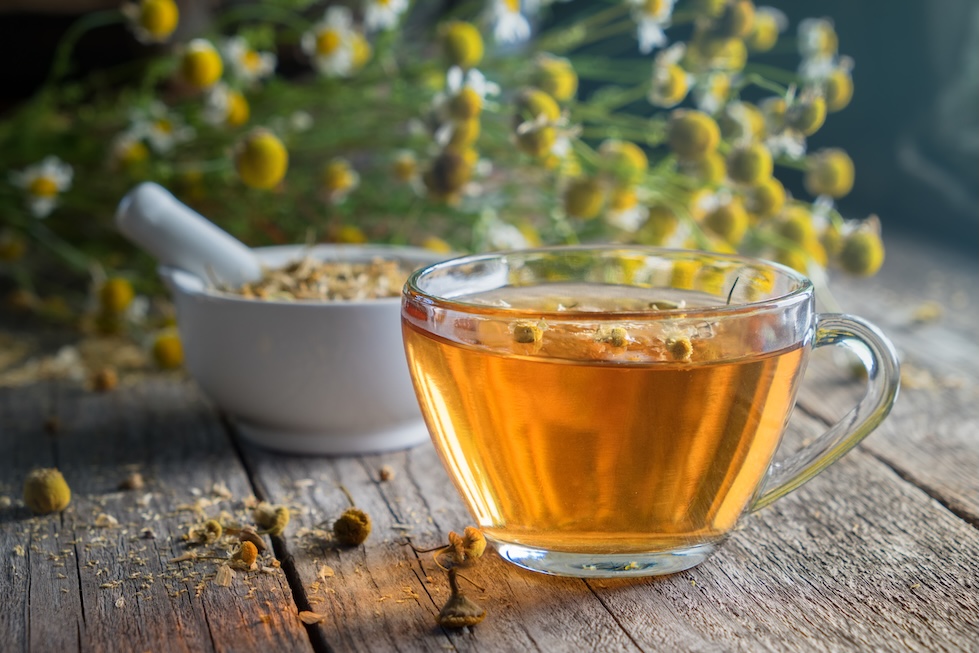
In some cases however, it is not that the body lacks a capacity to heal but rather is squandering this capacity by overreacting, or reacting to things that don’t matter. As an example of this form of stress is difficult teething experienced by some children. A normal process of growth and development should not be stressful, but for reasons which remain mysterious, it can be for some children. This is an example where an energetic approach to healing may be more helpful, not supplementing the vital force but guiding it towards balance. An herb like chamomile can often soothe stress and relieve pain in infants, including the pain of teething, and while there are oils in chamomile with analgesic activity, in these cases providing a pharmacological dose is insignificant. The fact that chamomile can work splendidly for this type of pain, even in homeopathic form with its constituents diluted to undetectable levels, should underscore their unimportance and prove that even chamomile tea is working on an energetic level. Teas are losing favor as a dosing form among herbalists today, generally because steeping the herb in water is a poor method for extracting its constituents, but in many cases these constituents probably don’t matter as much as some people think, which many energetic herbalists know quite well.
Regardless of how herbs are being employed, or in what dosage form, they all affect the body energetically. These effects are often gentle enough to heal, but subtle enough to go unnoticed. For this reason, many wise herbalists and energetic practitioners caution against using herbs needlessly or taking something for every little thing. If you’re not sick, you don’t need plant medicine is a dictum too often ignored, especially by those who approach plants materially and mechanistically as tools to boost vitality as opposed to gently redirecting it. Some people worry excessively about getting sick, taking numerous supplements they don’t really need as a sort of insurance policy. Others may be highly driven and competitive, taking a more-is-better approach and always seeking a silver bullet that will give them a competitive edge or enhance their longevity to superhuman levels. Biohacking is a popular term for this, and supplements including herbs are often employed in an effort to optimize function. In truth, neither herbs nor anything else can make the body perform better than it can in a natural state of health, or if so, can only do this temporarily at often a terrible cost. Even herbs that are perfectly safe and free of side effects can begin to work subtle harm when used in this manner, as the body can and will react to all of these disparate energies. What results is a diffused, scattered state energetically and gradual exhaustion of the body’s reactive power. Not only does this leave one spacy, unfocused, and more susceptible to influences, it will reduce the body’s response to the energy of medicines when they’re actually needed, all in a Faustian effort to transcend aging or tap into some unlimited potential.
This is not to say that one shouldn’t use herbal supplements – quite the contrary, herbs can do amazing things that improve health far beyond what conventional medicine is capable of achieving. Indeed, it is the ones who do not take natural products for every little thing who possess the greatest respect for plant medicine, precisely for this reason that they see it as something needed to treat the ill, not support or enhance the otherwise healthy. As a company that manufactures and sells herbal supplements, with a great respect for the energetic nature of plants, we believe that preserving the integrity of this medicine is more important than endlessly growing sales. This is why we formulate our products with practitioners in mind, selecting ingredients for their therapeutic properties rather than chasing market trends. Energique®’s formulas like Burdocom™, Hydrangeacom™, Intesticom™, and Solidagocom™ feature herbs drawn from traditional European, Native American, and Eclectic traditions to offer the highest therapeutic value to your clients or patients.
 How to Recommend Healthy Lifestyle Changes to Your Patients and Clients